
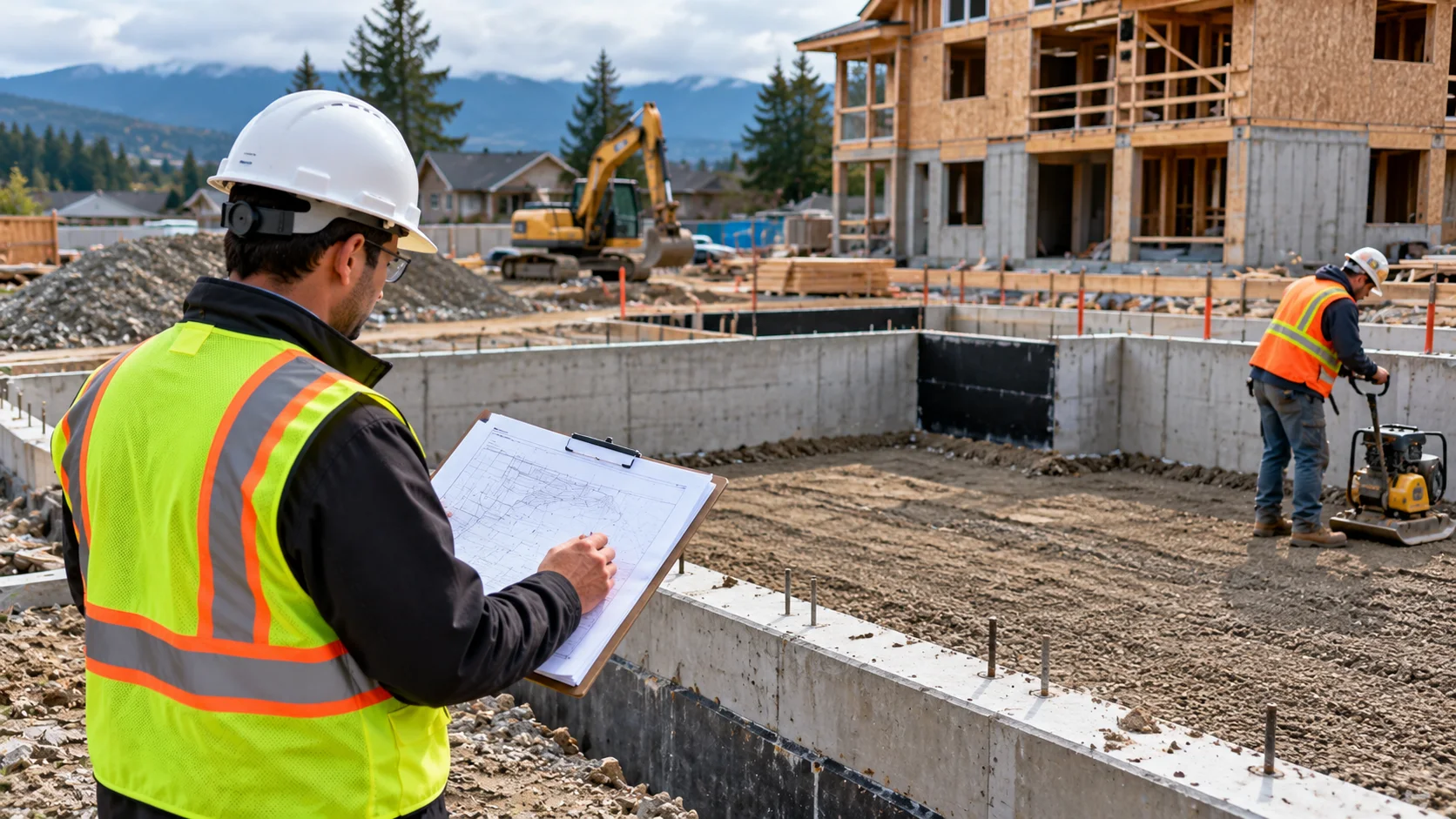
Geotechnical Field Reviews During Construction in British Columbia
Construction does not always unfold exactly as anticipated in the design documents. Ground conditions may differ from expectations, excavation levels may expose unexpected soil layers, and site preparation activities can reveal issues that need professional review.
Geotechnical field reviews during construction help assess whether selected site activities and observed ground conditions are consistent with the applicable geotechnical recommendations and project requirements.
For property developers, builders and project teams in British Columbia, field reviews can provide valuable observations at important construction stages. They also help communicate potential concerns to the relevant professionals before work proceeds further.
What Is a Geotechnical Field Review?
A geotechnical field review is a site visit conducted by a qualified geotechnical professional to observe specified construction activities or exposed ground conditions.
The purpose is generally to review the work within an agreed scope and determine whether the observations are consistent with relevant geotechnical recommendations, drawings or specifications.
Depending on the project, a field review may relate to excavation, subgrade preparation, engineered fill placement, foundation bearing surfaces or other ground-related work.
A field review is not automatically a comprehensive inspection of every construction activity. Its scope, timing and limitations should be clearly understood by the project team.
Why Are Geotechnical Field Reviews Important?
1. Checking Exposed Ground Conditions
Excavation can reveal soil layers or groundwater conditions that were not fully apparent during earlier investigations. A field review provides an opportunity to compare observed conditions with the information used for design.
If unexpected conditions are identified, the project team may need further assessment before continuing with the affected work.
2. Reviewing Subgrade Preparation
Before foundations, slabs, pavements or other elements are constructed, the underlying ground may need to be prepared according to the project specifications.
A geotechnical professional may review selected prepared surfaces to assess whether the observed conditions are consistent with the applicable recommendations. The exact review depends on the design, the construction stage and the agreed scope.
3. Observing Engineered Fill Placement
Some projects require fill to be placed and compacted according to specified material and construction requirements.
Where included in the scope, field reviews and associated testing can help assess whether the work follows the relevant specifications. The required methods and acceptance criteria should come from the project documents and qualified professionals.
4. Identifying Issues Before They Are Covered
Some ground-related conditions become difficult to examine once concrete, pavement or other construction materials have been placed.
Arranging reviews at the appropriate stages gives the project team an opportunity to document observations and address questions while the relevant work remains accessible.
5. Improving Communication Between Project Teams
Field observations can help geotechnical professionals, contractors, civil engineers, structural engineers and developers coordinate their work.
Clear communication about site conditions, outstanding concerns and required follow-up helps everyone understand what has been observed and which decisions remain to be made.
When Should a Geotechnical Field Review Be Arranged?
The timing depends on the project’s geotechnical recommendations, construction sequence and contractual or regulatory requirements.
Common situations in which a review may be required or useful include:
- After excavation exposes the proposed foundation bearing surface.
- Before placing concrete over a ground surface that requires geotechnical review.
- During site grading or preparation of selected subgrades.
- During placement of engineered fill where review or testing is specified.
- When unexpected soil or groundwater conditions are encountered.
- At specific construction stages identified in the geotechnical report or project specifications.
Project teams should schedule reviews in advance when possible. If work proceeds before a required review, it may become harder to verify the underlying conditions later.
What Does a Geotechnical Engineer Look for During a Site Visit?
The review checklist varies by project. Depending on the agreed scope, a geotechnical professional may consider the following.
Soil and Ground Conditions
The professional observes exposed soil and checks whether the conditions appear consistent with the information available for the project. Differences in soil type, moisture, layering or visible groundwater may require further consideration.
Excavation and Bearing Surfaces
For relevant foundation work, the reviewer may examine the exposed bearing surface, excavation depth and general ground condition against the applicable recommendations.
The reviewer should not assume that every excavation or foundation is acceptable simply because the surface appears firm. Acceptance must be based on the project requirements and professional assessment.
Fill Materials and Compaction Requirements
Where engineered fill is part of the work, the review may involve the specified material, placement process and compaction-related documentation or testing. Field observation alone does not replace testing where testing is required.
Drainage and Groundwater Observations
Water entering an excavation, seepage or changing ground moisture may affect construction activities. Such observations may need to be communicated to the design team so that the implications can be assessed.
Deviations From Project Documents
If the observed work differs from the relevant drawings, specifications or geotechnical recommendations, the issue should be documented and referred to the appropriate project professional for direction.
What Happens if Unexpected Ground Conditions Are Found?
Unexpected conditions do not always mean a project must stop entirely, but they should not be ignored.
A typical response may involve the following steps:
- Document the observation: Record the location, construction stage and nature of the concern.
- Notify the relevant team: Communicate with the contractor, project manager and responsible design professional as appropriate.
- Assess the implications: Determine whether additional investigation, testing or engineering review is needed.
- Obtain direction: Follow the recommendations or instructions issued by the appropriately responsible professional.
- Record the follow-up: Keep relevant site notes, test results and decisions with the project records.
The response depends on the nature and severity of the condition. A field review should not be treated as authorization to make design changes outside the reviewer’s authority or agreed scope.
Field Reviews, Testing and Full-Time Inspection: What’s the Difference?
These terms describe different activities and should not be used interchangeably.
Geotechnical field review: A review of specified site conditions or construction activities within an agreed scope. It generally represents observations made at particular times.
Construction materials testing: Testing performed using specified methods to evaluate materials or construction characteristics, such as compaction, where applicable. Testing requirements depend on the project specifications.
Full-time inspection or monitoring: More continuous attendance or observation, where required by the project. This is different from a limited field review and must be arranged separately if needed.
A project may require one or more of these services. The project documents and responsible professionals should establish the appropriate scope.
How Developers and Contractors Can Prepare for a Field Review
Good preparation can make a scheduled visit more useful and reduce avoidable delays.
Before the visit, project teams should:
- Confirm which construction activity or area needs review.
- Arrange access to the relevant excavation or prepared surface.
- Keep the latest applicable drawings and geotechnical recommendations available.
- Provide relevant construction and testing records.
- Ensure the work is at the required stage for observation.
- Identify any unusual ground conditions or questions that have arisen.
- Confirm who will receive the field review findings and coordinate follow-up.
The reviewer should be given enough context to understand what is being reviewed and which project requirements apply.
Geotechnical Field Reviews for Construction Projects in BC
British Columbia projects can involve varied ground conditions, site layouts and construction requirements. The appropriate review process therefore depends on the specific property, design and construction activities.
For residential developments, commercial buildings, industrial projects and subdivisions, geotechnical input may be required at selected stages to help address ground-related questions and support coordination with the wider design team.
The geotechnical report and project specifications should identify the relevant recommendations and any required review stages. Owners and contractors should confirm the scope with the responsible professionals rather than assuming that every project needs the same inspections.
How Pacific Geo Supports Construction Projects
Pacific Geotechnical Consulting lists field reviews during construction among its geotechnical services. Depending on the project requirements, field review work can help the team observe specified site conditions and communicate ground-related findings to the relevant project professionals.
The appropriate scope and timing should be established for each project, including whether additional testing, monitoring or specialist review is required.
To discuss your construction project, visit the Pacific Geo services page.
Frequently Asked Questions
What is the purpose of a geotechnical field review?
It allows a qualified professional to observe specified construction activities or ground conditions and assess them against relevant project recommendations within an agreed scope.
When should a geotechnical field review be scheduled?
The timing depends on the project requirements. Reviews may be needed at stages such as excavation, foundation preparation or engineered fill placement. Confirm the schedule with the responsible professionals.
Does a field review guarantee that construction is defect-free?
No. A field review covers the activities and conditions included in its scope and observed at the time of the visit. It does not guarantee the performance of every part of a project.
Is a field review the same as construction inspection?
Not necessarily. A field review may be limited to particular conditions or construction stages, while inspection or monitoring arrangements may involve a different scope and frequency.
What happens if the soil conditions differ from the geotechnical report?
The difference should be documented and communicated to the relevant professionals. Further investigation, testing or revised recommendations may be needed before affected work proceeds.
Should field reviews be arranged before concrete is poured?
Where the project requirements call for the bearing surface or underlying ground to be reviewed before it is covered, the review should be scheduled at that stage. The project documents and responsible professionals determine the actual requirements.
Conclusion
Geotechnical field reviews are an important part of coordinating ground-related construction activities with project recommendations. When arranged at the appropriate stages, they can help identify unexpected conditions, document observations and support timely communication between the project team.
The most effective approach is to define the review scope early, schedule visits before critical work is covered and ensure that any concerns are referred to the appropriate professional.
For geotechnical field review support in British Columbia, contact Pacific Geotechnical Consulting to discuss the requirements of your project.