
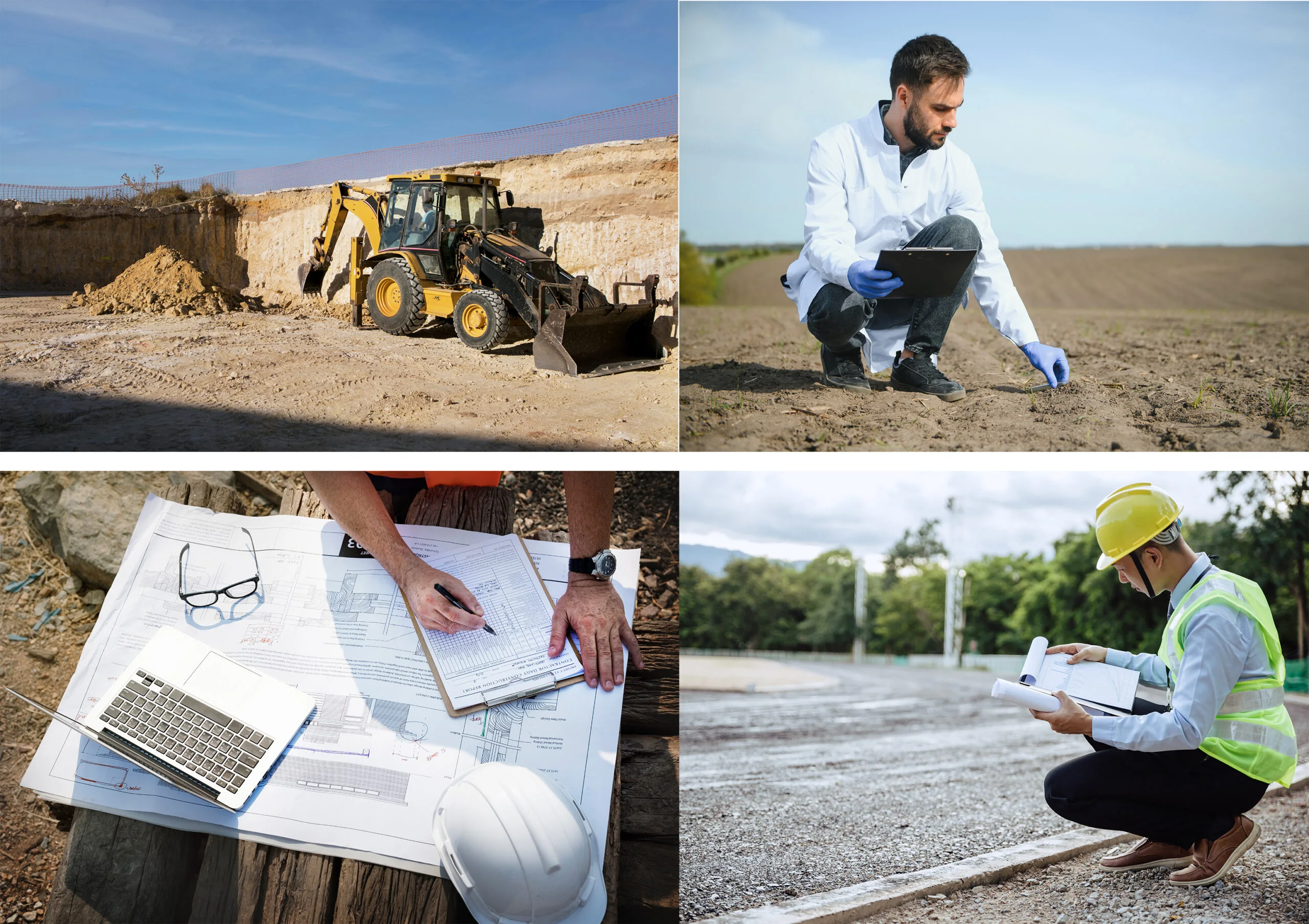
Soil Testing Services in British Columbia: A Complete Guide for Property Owners and Developers
Every successful construction project starts below ground, not above it. Before a single foundation is poured, the soil beneath the site needs to be understood — its strength, composition, drainage behavior, and stability. That’s the role of professional soil testing services, and it’s one of the most overlooked yet critical steps in any development process across British Columbia.
At Pacific Geotechnical, we provide comprehensive soil testing services for residential, commercial, and industrial projects throughout BC. In this guide, we’ll break down what soil testing actually involves, the different methods used, and why it’s a non-negotiable step for any construction project.
What Do Soil Testing Services Include?
Soil testing is a broad term that covers several distinct stages of investigation and analysis:
- Site reconnaissance – reviewing site history, topography, and existing records before any drilling begins
- Subsurface exploration – using boreholes, test pits, or cone penetration testing to physically sample soil at various depths
- Laboratory analysis – testing collected samples for grain size distribution, moisture content, plasticity, shear strength, and compressibility
- Groundwater monitoring – determining water table depth and seasonal fluctuation, which directly affects foundation and drainage design
- Geotechnical reporting – compiling all findings into a formal report with engineering recommendations for design teams
Each of these stages builds toward one outcome: giving engineers, architects, and developers the data they need to design safely and avoid costly surprises during construction.
Common Soil Testing Methods
Different sites and project types call for different testing approaches:
- Standard Penetration Test (SPT) – measures soil resistance and is widely used to estimate bearing capacity
- Cone Penetration Test (CPT) – provides continuous, detailed subsurface profiles, particularly useful in soft or layered soils
- Percolation Testing – assesses how quickly soil absorbs water, essential for septic system design in rural and semi-rural areas
- Atterberg Limits Testing – determines plasticity characteristics of clay soils, important for understanding swelling and shrinkage behavior
- Proctor Compaction Testing – establishes optimal moisture content for soil compaction during earthworks
A qualified geotechnical engineer selects the right combination of these methods based on your site conditions and project type.
Why Soil Testing Services Matter
Skipping soil testing — or relying on assumptions instead of data — is one of the costliest mistakes in construction. Without it, projects face serious risks:
- Structural settlement from building on soil with insufficient bearing capacity
- Slope failures on sites with unstable or saturated soil layers
- Drainage problems from undetected high groundwater tables
- Permit rejections, since most BC municipalities require a geotechnical report before approving building permits
- Budget overruns from unexpected ground conditions discovered mid-construction
In short, soil testing isn’t an added expense — it’s risk insurance that protects your entire project budget.
Soil Testing Across Different Project Types
The scope of soil testing varies significantly depending on what you’re building:
- Residential construction – typically requires a basic geotechnical investigation to confirm foundation type and bearing capacity
- Multifamily and subdivision developments – often need more extensive testing across multiple lots, plus slope stability and drainage analysis
- Commercial and industrial projects – usually require deeper investigations due to heavier structural loads
- Land due-diligence – buyers purchasing undeveloped land often commission soil testing before finalizing a purchase, to avoid inheriting costly ground conditions
- Septic and onsite wastewater systems – require percolation testing to determine if and how a system can be installed
What’s Included in a Geotechnical Report
Once testing is complete, you’ll receive a formal report that typically includes:
- A summary of site conditions and subsurface stratigraphy
- Laboratory test results
- Groundwater observations
- Foundation recommendations (footing type, depth, allowable bearing pressure)
- Earthwork and excavation guidance
- Any site-specific hazards, such as slope instability or expansive soils
This report becomes a key reference document for your structural engineer, architect, and municipal permitting office.
Why Choose a Local BC Geotechnical Firm
Soil conditions vary enormously across British Columbia — from the soft, compressible soils of the Fraser River delta to the rockier terrain found in parts of the Interior near Kelowna. A firm with regional experience understands these variations and can anticipate site-specific challenges that an out-of-province consultant might miss.
Pacific Geotechnical has conducted soil testing and site investigations for residential, multifamily, and commercial projects across Surrey, Kelowna, and the broader Lower Mainland. Our team, led by founder Gurbir Khaira, P.Eng., combines technical rigor with practical, locally-informed recommendations.
Final Thoughts
Whether you’re a homeowner planning a new build, a developer managing a multifamily project, or a buyer conducting due diligence on a piece of land, professional soil testing services give you the data needed to build safely, meet permitting requirements, and avoid expensive surprises down the line.
Contact Pacific Geotechnical today to discuss soil testing services for your project anywhere in British Columbia.